
24 August 2026
What Happens When Someone Has to Dig Up Your Resin Driveway?
A resin driveway is one continuous, jointless surface. That is exactly why people choose it, and it is also the reason the phrase “we’ll need to dig it up” lands harder than it would with block paving, where you lift the blocks, do the work and put them back. Rochdale’s housing stock makes this more than a hypothetical: much of the borough was built between the 1870s and the 1930s, and a good deal of the pipework serving those streets is of a similar vintage. Water companies across England still replace and repair thousands of kilometres of main every year, and a fair share of it runs beneath somebody’s front garden. You are laying a surface you intend to keep for twenty years. Find out what is under it first, who is allowed to open it, and what a proper repair looks like.
Your Drive Is the Lid on Other People’s Infrastructure
Under a typical Rochdale frontage you may have a water supply pipe, a stop tap, a gas service pipe, an electricity service cable, a foul drain running to the sewer in the road, and sometimes a shared drain taking your neighbour’s waste as well. Older terraced rows often have surprises: capped-off lead supplies, redundant coal chutes, and drainage laid long before anyone recorded it.
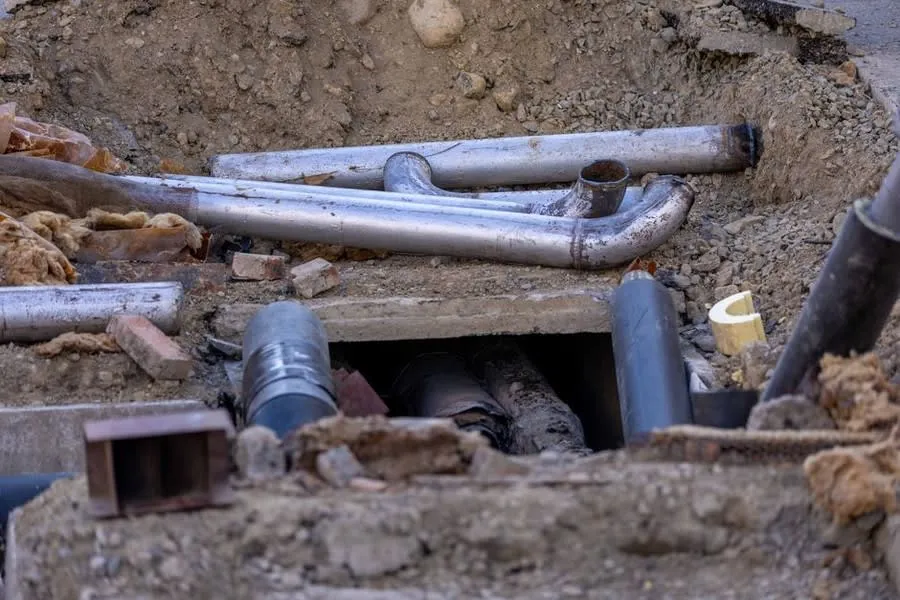
None of that stops you having a resin drive. It just means the excavation stage is the moment to find out what is down there, mark it and plan around it. A good installer treats the groundwork as a survey as much as a dig, which is one more reason the installation process is worth understanding before you book anyone.
Manholes and Inspection Covers: Two Honest Options
An inspection chamber cannot be covered over. Drainage has to stay accessible, and burying a chamber creates a problem for whoever eventually has to rod it - possibly you, at two in the morning.
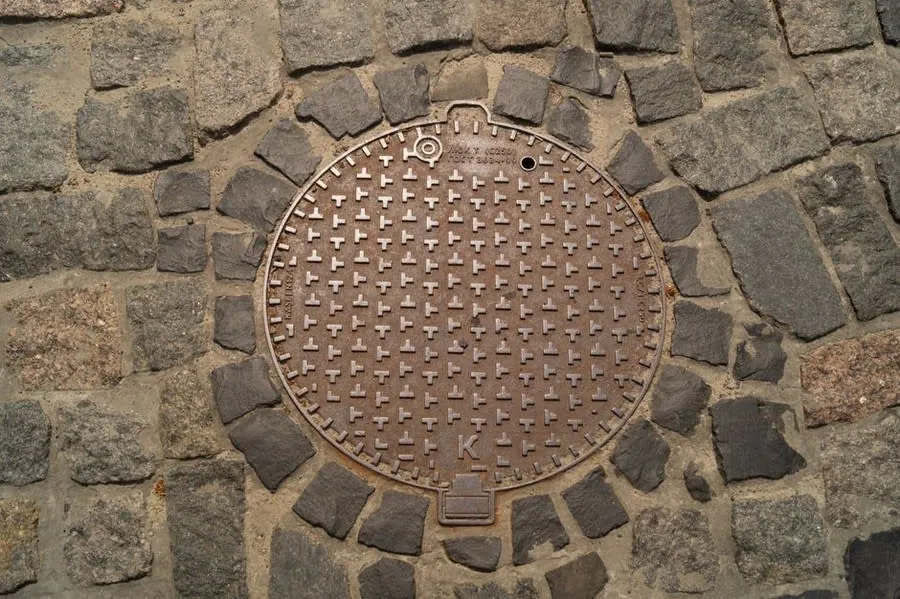
Option one is a standard cover, raised or lowered to sit flush with the finished resin and framed neatly. It is cheap, it works, and it looks like a manhole. Option two is a recessed tray: a cover with a shallow dish that gets filled with the same resin bound mix, so from a few feet away the drive reads as continuous and only the thin metal outline gives it away. Trays cost more and add a little labour, and on a small terraced frontage where the chamber sits dead centre, they are usually money well spent. What you should not accept is a cover left proud of the surface, sitting in a puddle, or a chamber quietly resined over.
The Bits That Need to Stay Reachable
Beyond drainage, two things want thinking about before the resin goes down. The first is your external stop tap, which is what you or a plumber will reach for during a burst. The second is anything a meter reader or an engineer needs: water meters where fitted, and gas or electricity boxes at the boundary.

Bringing a stop tap chamber up to the new finished level with a proper surface box is a ten minute job during groundwork. Cutting into a cured surface to find one later is a bad afternoon and an avoidable bill. Worth knowing too: responsibility for the pipework is split. United Utilities explains where its responsibility for supply pipes ends and yours begins - broadly, the communication pipe from the main to your boundary is theirs, and the supply pipe from the boundary into the house is yours. That line, invisible and usually somewhere under your new driveway, decides who pays if it leaks.
When the Gas or Water Company Turns Up
Utilities have statutory rights to access and repair their apparatus, and no driveway surface changes that. If a main under your street is being replaced, or a leak is traced to their pipe, they will dig. What varies is how well they put it back.

The obligations are real rather than a matter of goodwill. Cadent, the gas network across the North West, sets out in its guidance on works in your street that paths and driveways are restored within a stated number of working days of the supply going back on, that specialist or hard-to-source surfaces may take longer, and that the finish is matched to existing surfaces as closely as possible. Resin bound is firmly in the “specialist” category. Say so early, in writing, and give them the name of the installer and the aggregate blend. A crew that would otherwise reach for a bag of cold-lay tarmac will usually agree to bring a resin contractor in instead if you raise it before the hole is dug rather than after.
Who Pays, and the Awkward Middle Ground
The clean cases are easy. Their pipe, their dig, their reinstatement. Your pipe inside your boundary, your bill for both. Your foul drain is where it gets murkier, because many lateral drains and shared sewers transferred to the water companies years ago, and United Utilities’ guide to sewers and drains is the place to check which side of the line a particular pipe falls on before you agree to anything.
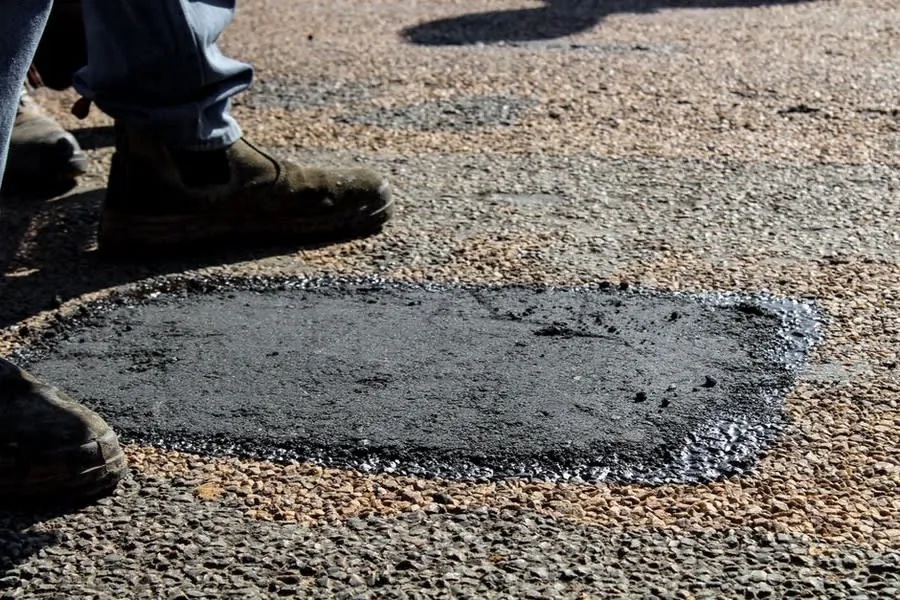
Two practical habits protect you. Photograph the finished driveway when it is laid, from several angles, and keep the images with your paperwork - it is the simplest evidence of condition there is. And when anyone asks to dig, ask before they start what the reinstatement will be, in what material, and by when. A crew that has committed to a resin repair in advance behaves differently to one asked afterwards.
Designing a Drive That Can Be Opened Again
You cannot predict where a leak will happen, but you can make a future repair easier and cheaper in three ways.

Keep the record. Ask your installer for the exact aggregate blend name, the supplier and the resin system used, and keep it somewhere you will find it in eight years. Keep a spare bag of the dry blend in the garage if the supplier will sell you one, because quarries change and blends get discontinued. Second, use design lines deliberately: a border course, a change of blend at the threshold or a drainage channel gives a future repair a natural edge to finish against, so a patch becomes a defined panel rather than a blotch. Third, keep the build-up consistent. A drive with the same sub-base depth throughout is far simpler to reinstate than one that changes spec halfway across.
What a Proper Resin Repair Involves
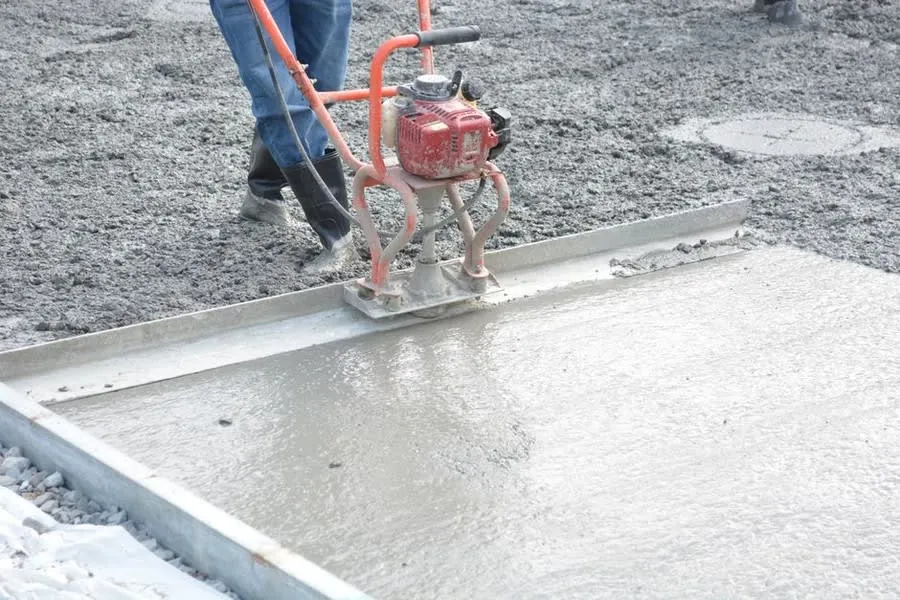
Done well, the surface is saw-cut back to a clean straight edge, the base is made good and compacted properly, and fresh material is mixed and trowelled into the opening and worked into the cut line. Done badly, a shovel of loose stone goes in the hole with resin poured over it, and it fails within a winter.
Be realistic about appearance. A new patch will read brighter than surrounding material that has had a few years of Pennine rain, traffic film and low winter sun on it, and it takes a season or two to settle in. The alternative some people choose on a small frontage is to relay a whole defined section rather than patch a metre of it, which costs more up front and disappears completely. Either way the fix is straightforward - which is the reassuring part of all this, and much the same story as repairing a cracked or sunken drive for any other reason.
Frequently Asked Questions
Can you cover a manhole with a resin driveway?
You must never bury an inspection chamber under resin - access has to be maintained. The two proper options are a standard cover set flush into the surface, or a recessed tray cover that is filled with the same resin bound material so it reads as part of the drive. The recessed tray costs more and is worth it on a small frontage where the cover would otherwise sit right in your eyeline.
Who pays to repair my driveway after a water leak is fixed?
It depends whose pipe leaked. If it is the water company’s main or communication pipe, they carry out the excavation and the reinstatement. If the leak is on your own supply pipe inside your boundary, the repair and the surface reinstatement are both yours, which is why a leak under a new driveway is one of the few genuinely expensive surprises in resin surfacing.
Can a resin driveway be patched without it showing?
It can be patched properly and permanently, but it will not be invisible at first. Fresh resin bound laid against material that has weathered for a few years sits slightly brighter and cleaner until it catches up, which usually takes a season or two of Rochdale weather. Keeping a bag of the original aggregate blend after installation makes the match far closer, because blends change over the years.
Should I move my water stopcock before laying a resin driveway?
You do not usually need to move it, but you do need to keep it reachable. The stop tap chamber should be brought up to the finished level with a proper surface box during the groundwork rather than being tarmacked over and forgotten. Ten minutes at the excavation stage saves cutting a hole in a finished drive during a burst.
Planning a drive around drains, covers and services? Get a free, no-obligation quote in Rochdale.