
22 August 2026
What's Actually Under a Resin Driveway? Sub-Base, Depths and How to Read a Rochdale Quote
A resin bound driveway is roughly 15 to 18mm thick. That is the whole of the part you look at, admire and pay attention to - less than the depth of your little finger. The other 200mm or so beneath it is where the money, the labour and virtually every driveway failure lives. When a drive sinks in the wheel tracks after two winters, the resin has not failed; something under it has. That makes the sub-base the most important thing on a quote and the thing homeowners are least equipped to compare, which suits the corner-cutting end of the trade very nicely. This is a walk down through the layers, what each one is for, how Rochdale’s ground changes the numbers, and how to read a specification without being a groundworker.
The Surface Is a Finish, Not a Structure
It helps to stop thinking of resin bound as a paving material and start thinking of it as a coating. The stone and resin are mixed together in a forced-action mixer and trowelled out as a continuous, jointless layer, and it will faithfully take the shape of whatever it is laid on. Firm, flat and well-drained underneath, it stays firm and flat. Soft or uneven underneath, it becomes a very expensive tracing of the problem.
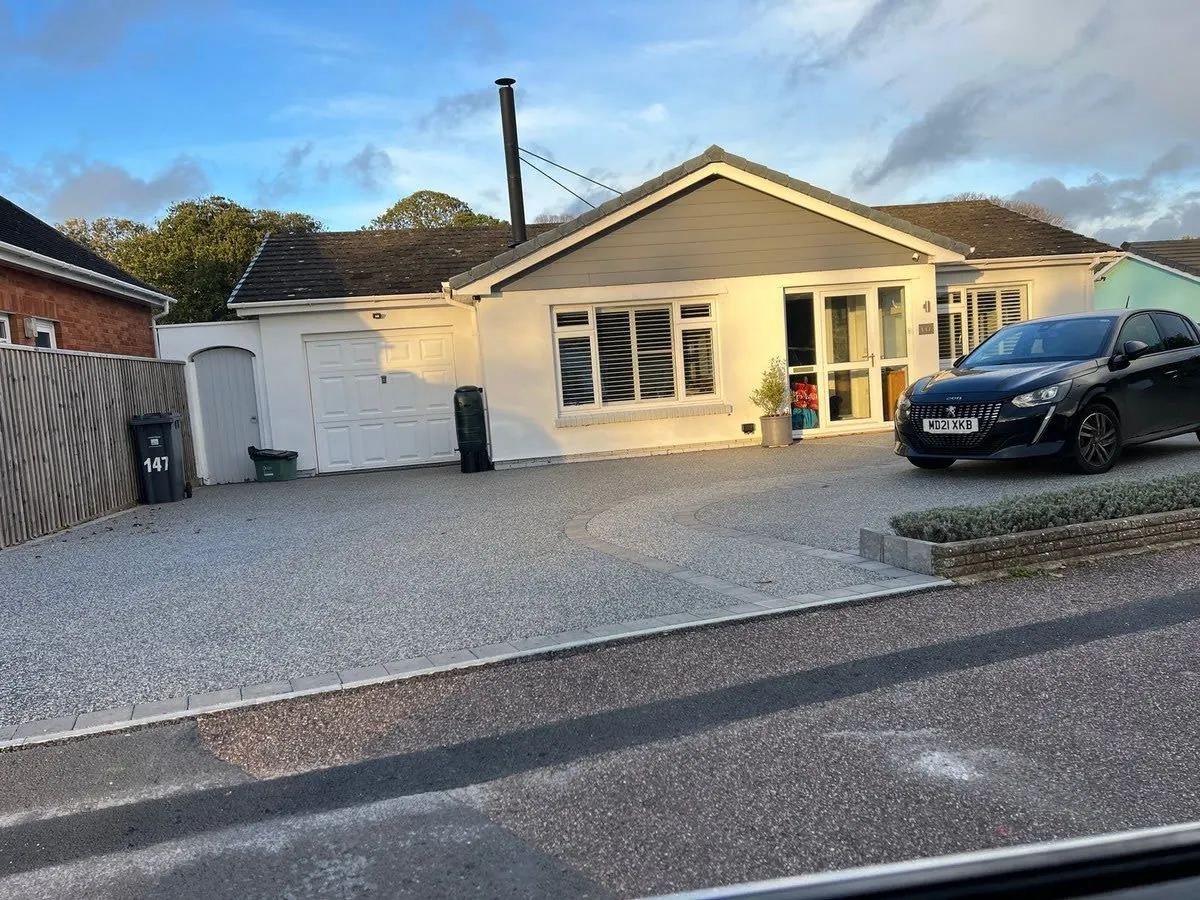
So comparing two quotes on the resin alone tells you almost nothing. Two installers can offer the same aggregate blend, the same thickness and the same UV-stable binder, and be quoting entirely different driveways.
The Build-Up, Layer by Layer
From the bottom up, a properly built new resin drive has four things under the surface. The subgrade is your natural ground, dug down to a level formation and compacted. A geotextile membrane sits on top of it, whose job is to stop the soil below and the stone above mixing into each other over time - cheap to include, expensive to omit.
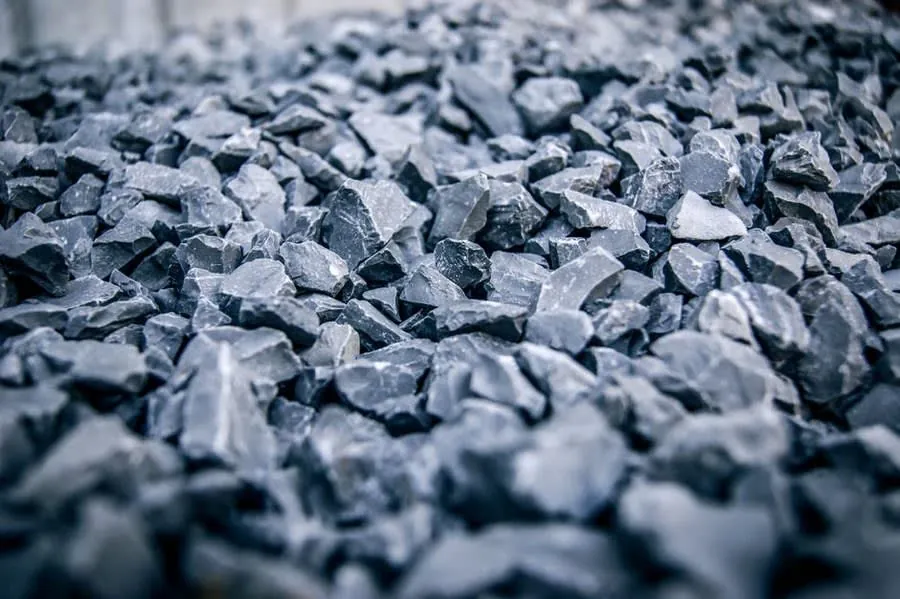
Above that comes the sub-base: compacted angular crushed stone, laid and whacked in layers. For permeable construction this is usually an open-graded stone such as MOT Type 3, which has had most of the fine material screened out so water can pass through the voids rather than being held in them. Then a bound base course - typically around 50mm of open-graded asphalt, sometimes permeable concrete - which gives the resin a rigid, even surface to key into. The resin goes on last.
Why Rochdale’s Ground Changes the Spec
The layers are standard. The depths are not, and the reason is under your feet. The British Geological Survey’s account of the Rochdale district describes bedrock of Pennine Coal Measures mudstone, siltstone and sandstone, blanketed across much of the borough by superficial glacial deposits - till, sands and gravels left by the last glaciation, running to substantial thickness in places.
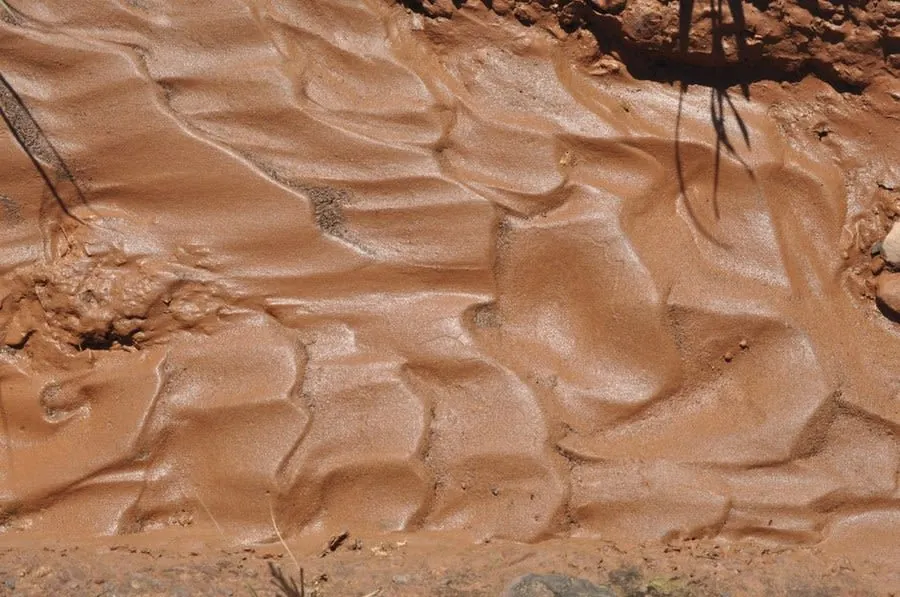
In practice that means a lot of Rochdale front gardens sit on stiff glacial clay. Clay holds water, softens when it is wet, and swells and shrinks with the seasons - and in a borough this wet, it spends a good deal of the year saturated. A build-up that would be plenty on free-draining sandy ground can be marginal here. Add the made ground you find on older mill-town plots, where a century of demolition rubble, ash and garden waste has been levelled over, and you get the honest answer: nobody can specify a Rochdale drive properly without digging a hole in it first.
How Deep Should It Actually Go?
For a domestic drive carrying cars, a compacted sub-base of around 150mm over a sound subgrade is the usual starting point, giving a total excavation of roughly 200 to 250mm once the base course and resin are added. That is a starting point, not a rule.
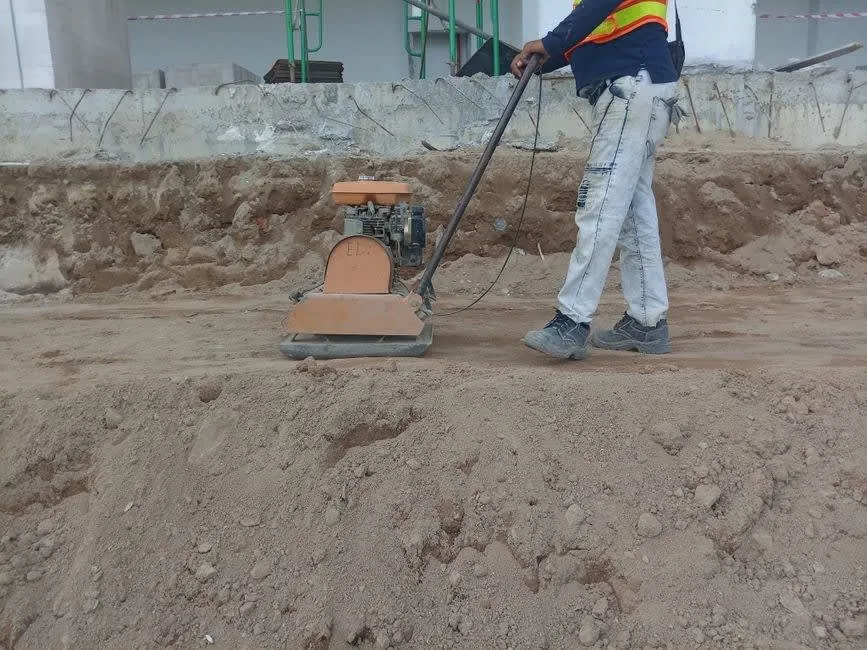
It goes up for soft or clay-heavy subgrades, for drives that will take a van or a caravan, for shared accesses used by several households, and where the sub-base is doubling as water storage. The trade guidance from Interpave, the precast concrete paving association, sets out how permeable pavement sub-bases are designed around both structural load and hydraulic storage, with depths increasing considerably where the layer has to hold rainfall as well as carry traffic. The practical version for a homeowner: if a quote specifies the same depth for every job regardless of what is under the drive, it is a price list, not a design.
Permeability Has to Go All the Way Down
Resin bound gets sold on being permeable, and it is - but only as part of a build-up that is permeable the whole way down. Lay it over a sealed concrete slab with no drainage route and the water reaches the slab, has nowhere to go, and comes back out at the edges or sits in hollows.
This also matters for the paperwork. The government’s guidance on permeable surfacing of front gardens is what keeps a driveway inside permitted development, and it is about where the water actually ends up, not what the top layer is called. On heavy clay that does not soak away quickly, a good installer will design a route - a soakaway, a border, a connection into existing drainage - rather than pretend the ground will take it. Our installation process page covers how that gets set out on site.
When You Can Keep What Is Already There
Not every job needs a full dig. Where a drive already has a sound concrete or tarmac base with no cracking, movement or ponding, resin can be laid straight over it at around 15 to 18mm, which saves the excavation, the muck-away and a fair slice of the cost.
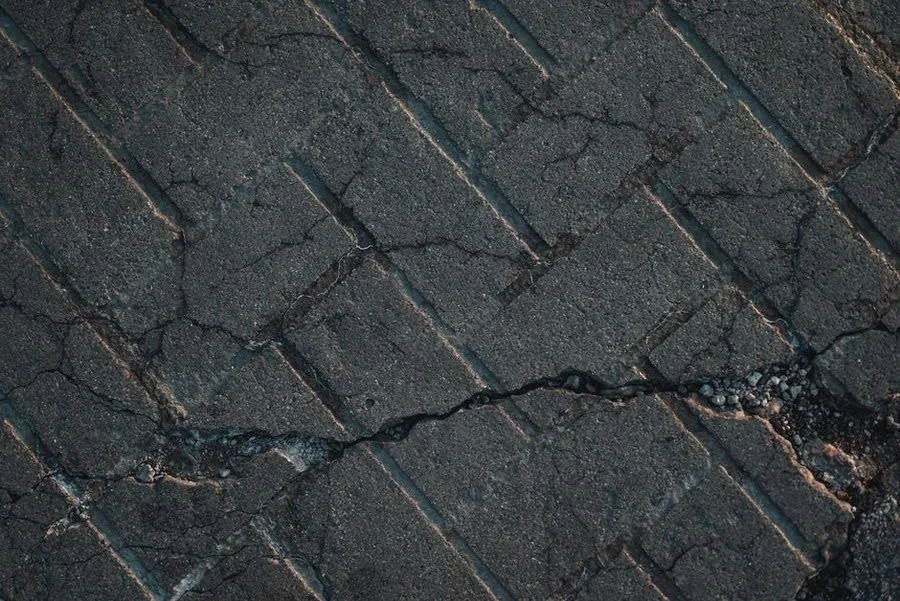
The catch is that an overlay inherits everything about the base, good and bad, and a surface that is already moving will keep moving under new resin. We go through how to judge that in our guide to laying a resin driveway over an existing drive in Rochdale. The short version: the test is whether the base is sound today, not whether it looks tidy.
Five Lines That Tell You Whether a Quote Is Serious
You do not need to know your Type 1 from your Type 3 to compare quotes properly. You need five things written down. Excavation depth. Sub-base material and its compacted thickness. Whether a geotextile separation layer is included. The base course type and depth. And how the perimeter is restrained and where the water goes.

Ask all five of every company that visits. The answers will not always match each other, and that is useful - it shows you who has looked at your ground and who has looked at your square metres. Any installer confident in their build-up will put it in writing without being pushed. Anyone who deflects with talk of the guarantee instead is telling you what the guarantee will be worth.
What It Looks Like When the Base Was Wrong
Base failures show up in recognisable ways, usually within two or three winters rather than immediately, which is long enough for a cheap installer to be difficult to find. Ruts and dishing in the wheel tracks mean the sub-base was too thin or under-compacted for the load.

Water sitting in patches after rain on a supposedly permeable drive means the layers below are not draining. Cracks appearing in straight lines usually mean an old base underneath is moving and telegraphing through. Crumbling along the perimeter means the edge was never properly restrained. None of these are resin problems, and none of them can be fixed by patching the resin - which is the whole argument for getting the part you cannot see right the first time.
Getting the Base Right in Rochdale
We dig trial holes on Rochdale surveys because the borough’s ground genuinely varies street to street, and because the depth we specify changes the price. It is better to have that conversation at the quoting stage than to discover it halfway through the excavation. If you have quotes in front of you and cannot tell what is being proposed underneath, send us the wording and we will tell you what it does and does not commit anyone to.
Frequently Asked Questions
How deep is a resin bound driveway?
The resin bound layer itself is only about 15 to 18mm on a domestic drive. Everything else is underneath it: typically a 50mm open-graded base course, sitting on 150mm or more of compacted sub-base stone, over a geotextile and the prepared subgrade. Total excavation on a Rochdale car drive is usually somewhere between 200 and 250mm, and deeper where the ground is soft or the drive takes heavier vehicles.
What goes under resin bound gravel?
Resin bound needs a solid, free-draining base underneath - it is a wearing surface, not a structure in its own right. On new construction that means a geotextile over the subgrade, a compacted open-graded sub-base such as MOT Type 3, and then a bound base course of open-graded asphalt or permeable concrete for the resin to be trowelled onto. Resin cannot be laid onto soil, sand or loose stone.
Does the sub-base need to be permeable in Rochdale?
If you want the drive to stay permeable, yes - every layer has to let water through, not just the top one. Resin bound over a sealed concrete raft with nowhere for the water to go will pond and run off, and it loses the permitted development advantage that makes permeable surfacing so straightforward. On Rochdale’s clay-heavy subgrade an installer may need to add a drainage route rather than rely on the ground soaking it all away.
How can I tell from a quote whether the base is right?
Look for five things in writing: the excavation depth, the sub-base material and its compacted thickness, whether a geotextile separation layer is included, the type and thickness of the base course, and how the edges are restrained and where water goes. A quote that gives a price per square metre and says nothing about what is below the resin is not a specification, and it gives you nothing to hold anyone to.
Want a specification you can actually compare? Get a free, no-obligation quote in Rochdale.