27 August 2026
Resin Driveways And Tree Roots: What Rochdale Homeowners Should Know
Almost every quote we look at that involves a mature tree starts the same way: someone has been told they will have to lose it. Usually they do not. Trees and driveways coexist all over Rochdale, from the lime-lined roads around Broadfield Park to the sycamores that self-seeded into half the back entries in Castleton, and the reason people think otherwise is that they have seen what roots do to concrete and block paving. Roots and rigid surfaces genuinely do fight. Roots and a flexible, permeable surface built the right way get on rather better. The catch is that “the right way” means a different build to a standard driveway, decided before anyone books a digger rather than after the first spadeful comes up full of roots.
What Roots Actually Do, And What They Get Blamed For
The picture most people carry around is a root the thickness of an arm slowly levering a surface apart. That happens, but it is the minority of cases and it takes decades.
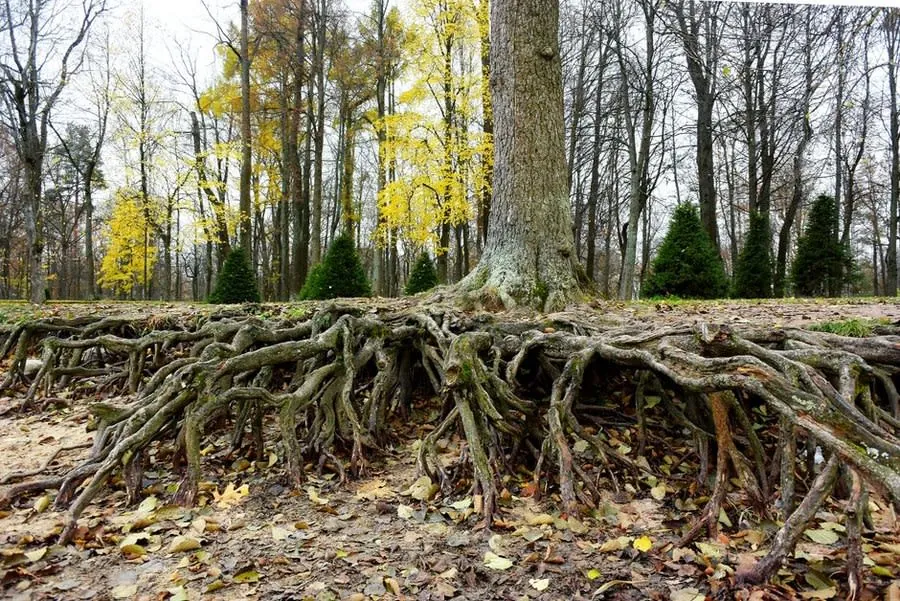
The everyday reality is less dramatic. Most of a tree’s working roots are fine, hair-like things sitting in the top 600mm of soil, spreading outwards far wider than the crown rather than downwards. They do not smash surfaces. They get killed by them, or rather by the excavation and compaction that goes in first. The Arboricultural Association’s advice on root damage to driveways and drains makes a point homeowners rarely hear: cracking in a drive is frequently superficial, and it is a separate mechanism from the subsidence people immediately start worrying about. Roots also rarely break sound drains. They get into drains that were already leaking.
So the questions to ask are not “will this tree wreck my drive” but “where is its root zone, and can we build without wrecking that”. If you are weighing up the surface itself, our page on resin bound driveways covers how the material is put together.
First Question: Whose Tree Is It?
This changes everything about what you are allowed to do, and it is answered in five minutes.
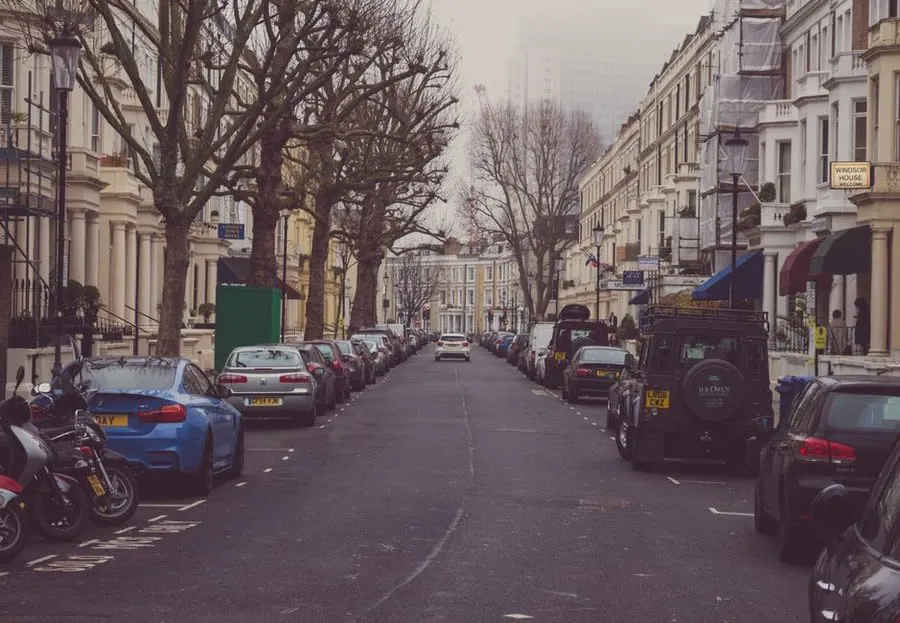
Rochdale Borough Council manages trees on land it owns or maintains, which includes roadside pavements, verges, parks and open spaces. It does not manage trees in private gardens, and housing association land is the association’s responsibility. If the tree sits in the verge outside your wall, it is a highway tree and nothing about your driveway gives you any rights over it. If it is in a neighbour’s garden and the roots have crossed into yours, common law lets you cut back what encroaches, within limits that matter more than most people assume.
If it is your own tree in your own front garden, you have the most freedom and the most to lose. Mature trees are the thing that makes a street worth living on, and they add rather more to a frontage than an extra metre of parking does.
Protected Trees Change The Method, Not The Answer
A Tree Preservation Order is not a refusal. It is a requirement to ask first.
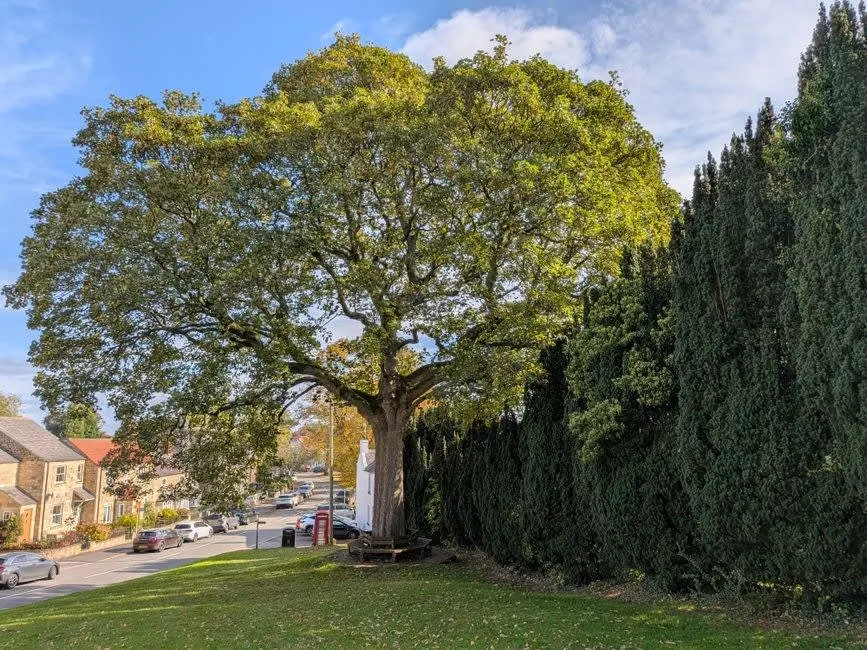
A TPO prohibits cutting down, uprooting, topping, lopping and wilful damage without the council’s consent, and Rochdale Borough Council’s tree preservation order pages set out how consent is applied for. Note the word damage. Trenching through a root plate is damage, even though nobody has touched a branch. That is the trap: people check whether they are allowed to prune, decide they are not pruning, and dig anyway.
Conservation areas work differently again. There, most trees above 75mm trunk diameter are protected by default and you have to give the council six weeks’ written notice before work, which gives it time to decide whether to make a TPO. Rochdale has a good number of conservation areas across the borough, and plenty of the frontages in them are exactly the sort where somebody wants to add parking. Check before you commit, not after.
Permeable Surfaces And Roots Want The Same Thing
This is the part that gets missed, and it is the strongest argument for resin bound around a tree.
Seal the ground over a root zone with concrete or a bound impermeable surface and you cut off the water and the air the roots were living on. The British Geological Survey’s work on swelling and shrinking soils notes the consequence: where paving reduces infiltration, trees push roots deeper and further out looking for moisture, drawing water from a wider area than before. Sealing the ground does not stop root activity. It moves it somewhere else and makes it more determined.
Resin bound over an open graded stone base does the opposite. Rain goes through the surface, through the sub-base and into the ground beneath, roughly where it always went. The tree carries on drinking from the area it already occupies. That is better for the tree and, over twenty years, better for the drive.
One Rochdale specific point, because it saves a lot of needless worry. Root related subsidence to houses is overwhelmingly a shrinkable clay problem, and the geology that causes it sits mainly in the south east of England. Round here the ground is glacial till over Carboniferous rock, so the realistic risk from a nearby tree is a lifted surface or a blocked drain rather than movement in the house. That is a much smaller problem than the one people are usually imagining.
Building Over Roots Without Killing The Tree
The standard driveway build excavates 150mm to 200mm, compacts a stone base and lays the surface on top. Inside a root protection area, every part of that sentence is a problem.
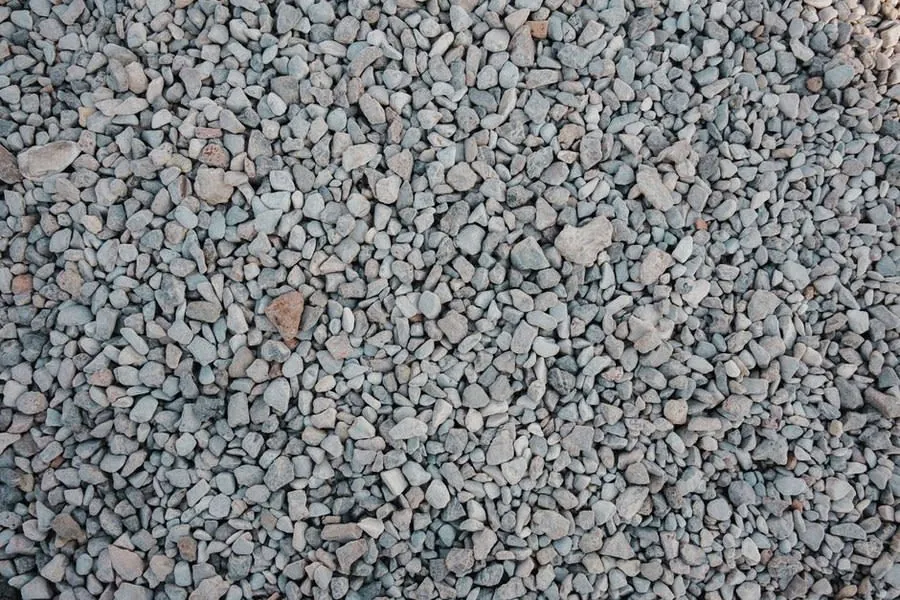
The alternative is a no-dig build, and it is well established rather than experimental. The existing ground is left alone. A geotextile separation layer goes down, then a cellular confinement system, a honeycomb of plastic cells, filled with sharp angular stone containing no fines. The cells stop the stone spreading sideways under load, so wheel loads are dissipated across the layer instead of being driven down into the soil. The resin goes on top of that. Nothing is excavated, nothing is compacted into the root zone, and water still gets through.
The trade off is level. A no-dig build goes up rather than down, typically by 150mm or more, so it needs thinking about at the threshold, the garage door and the junction with the footway. It also costs more than a standard base. Set against losing a mature tree, or against replacing a failed drive in eight years, it is usually the cheap option. Our guide to what goes under a resin driveway explains the conventional build for comparison.
When The Roots Have Already Lifted The Old Drive
Plenty of people come to this with the damage done: a block paved or concrete drive with a ridge running across it and a trip edge by the gate.
Resurfacing over a deformed base just reproduces the deformation in a new material, so the ridge has to be addressed. Sometimes that means an arborist carefully reducing a specific root under supervision, which is a real option on smaller roots but not on structural ones near the trunk. More often it means accepting a change of level: regrading the drive so the high point becomes a gentle sweep rather than a step, and letting the new surface follow the ground rather than fighting it. Resin bound suits this because it is laid to whatever profile the base gives it, without joints to open up.
The Species That Cause Most Bother Round Here
Not all trees are equally awkward, and knowing which one you have got tells you a lot.

Sycamore is everywhere in the borough, seeds itself into any neglected corner and roots vigorously and shallowly. Lime is common on older residential roads and produces plenty of surface root plus a summer of sticky honeydew on parked cars. Poplar and willow are the water hunters, and neither belongs within striking distance of a drive or a drain. Birch, rowan and most of the ornamental cherries planted through the 1960s estates are comparatively well behaved, with modest root spread. Age matters as much as species: a tree that has been in place for forty years has an established root system that a driveway build has to negotiate, while a fifteen year old rowan has options.
Answer The Tree Question Before You Get Quotes
The cheapest point at which to deal with a tree is before anyone prices the job.
Establish who owns it. Ring the council and ask whether it is protected or in a conservation area. Pace out roughly where the roots are likely to run, remembering that the spread is wider than the branches. Then tell every installer you invite, and see who asks follow up questions and who says it will be fine. An installer who has not mentioned the tree by the end of the site visit has not priced for it, and that gap will surface halfway through the dig.
Done in that order, a mature tree is a design constraint rather than a crisis. You keep the tree, the street keeps the tree, and the drive gets built on a base that will still be flat in twenty years. If you have a tree next to a frontage you want surfaced, get in touch for a site visit and we will tell you honestly what the build needs to be.