
14 August 2026
Resin Driveways for Sloped and Steep Driveways in Rochdale
Rochdale is not a flat town. Sitting where the Greater Manchester plain rises into the south Pennines, whole neighbourhoods climb the valley sides, and a huge number of driveways here run up, down or across a slope. That brings real questions a level-ground guide never answers: will the resin stay put, where does the water go, and is it safe underfoot in a Pennine winter? The short version is that resin bound copes with gradients better than most surfaces, but only if the drainage and groundwork are done for the slope rather than in spite of it. Here is what actually matters when you are surfacing a sloping or steep driveway in Rochdale.
Why So Many Rochdale Driveways Are on a Slope
The borough rises from around 120 metres near the town centre to well over 300 metres on the moorland fringe, and the housing followed the contours. Streets in Norden, Wardle, Whitworth and up the Littleborough side routinely sit on a noticeable incline, and even the Victorian terraces closer in were often built stepping up a hill.

That means a sloped driveway here is the norm, not the exception. It also means run-off has somewhere to go in a hurry - water gathers speed downhill - so how a driveway handles that slope is not a detail. It is the whole job.
Can You Lay Resin on a Sloped Driveway?
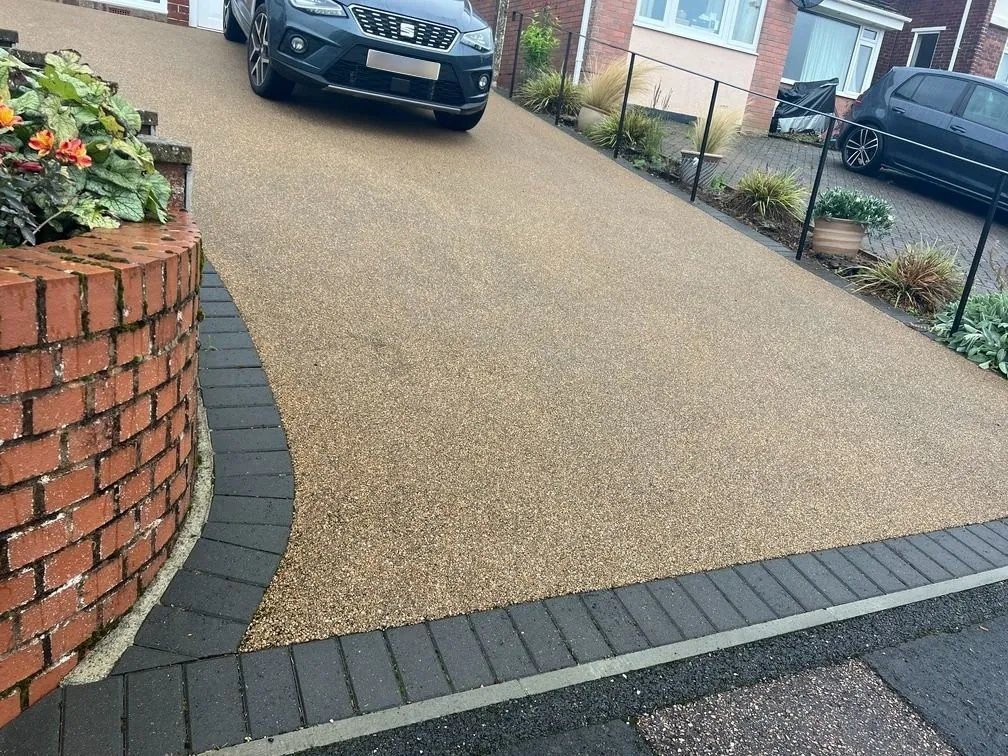
Yes, and it is one of resin bound’s quiet strengths. The mix is troweled by hand to follow the fall of the ground, so it hugs a gradient in a way that rigid slabs or block paving cannot. There are no joints to open up as the slope settles, and nothing loose to wash downhill the way gravel does after the first heavy Rochdale downpour. For more on how the surface itself is built up, see our resin bound driveways page.
As a working rule, gradients up to about 1 in 8 - roughly 12% - are comfortable. Beyond that the mix gets trickier to lay to an even depth and grip matters more, so the approach changes rather than the answer becoming a flat no.
Drainage Is the Real Challenge on a Slope
On a level drive, permeability does most of the work. On a slope, some water will always want to travel across the surface before it soaks in, and if that is ignored it ends up sheeting down onto the pavement, the road, or worse, your garage door. The fix is to plan the drainage for the fall of the land - usually a channel drain across the bottom, and sometimes part way down a long run.
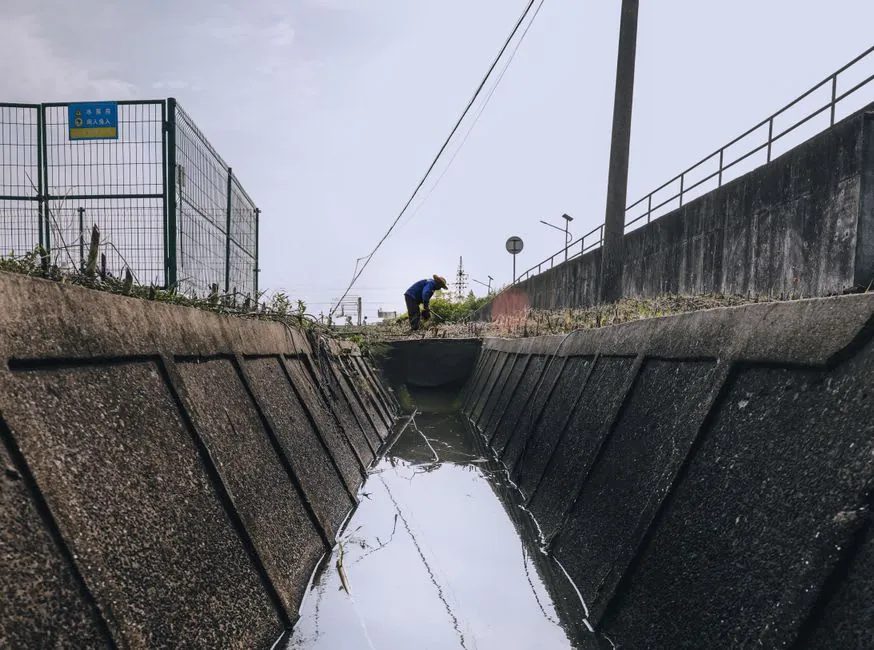
Because resin bound is permeable, it already takes a lot of the load - the government’s guidance on permeable front-garden surfacing is built around exactly this, water soaking in rather than running off. On Rochdale’s steeper plots we pair that permeability with a free-draining sub-base and a channel where the slope demands it, so even a cloudburst has somewhere to go.
Grip and Safety on a Steep Resin Drive
A common worry with any smooth-looking surface on a hill is whether it turns into a slide in frost. Resin bound actually holds up well here, because the finish is not smooth at all up close - it is exposed natural aggregate, and that texture gives tyres and feet something to bite on.

On a steep drive that catches Rochdale’s frosty mornings, we can push that further by specifying a slightly larger or more angular aggregate for extra grip. And because water drains straight through rather than pooling, there is far less of the surface ice that makes a sealed slope treacherous in January.
Groundwork and Edging on a Gradient
The part you never see is what makes a sloped drive last. The sub-base has to be dug and compacted to hold its shape on the incline, and the edge restraints have to be strong enough to stop the resin creeping downhill over the years. Skip either and gravity slowly wins.
On steeper Rochdale plots that sometimes means a small retaining detail or a step in the levels to break up a long fall. It is more involved than a flat drive, which is exactly why a proper site visit matters - the groundwork is quoted for your actual slope, not an average one.
When a Slope Is Genuinely Too Steep
Honesty helps here. There is a point where a single sweep of resin up a very steep bank stops being sensible - grip, drainage and the sheer difficulty of laying an even surface all work against it. On those plots the better answer is to terrace the slope: two or more level runs of resin linked by steps or a short retaining wall.

That is not a compromise so much as a better design - it gives you flat, usable, safe space instead of a ramp, and it still uses the same permeable resin surface throughout. A good installer will tell you when terracing beats a single slope rather than quoting you for something that will not work.
Getting a Sloped Resin Driveway Right in Rochdale
The difference between a sloped resin drive that lasts 20 years and one that fails is almost never the resin. It is whether the drainage, groundwork and edging were designed for the gradient. That is not something you can judge from a photo or a phone quote, and it is worth being wary of anyone who tries.
Because a slope also changes how much preparation is needed, it is worth reading up on whether you need any approvals first - our guide to planning permission for a resin driveway in Rochdale covers that, and permeable drives almost never do. We survey sloping driveways right across the borough and will tell you plainly what your gradient needs - and when terracing is the smarter call.
Frequently Asked Questions
Can you lay a resin driveway on a slope in Rochdale?
Yes. Resin bound is well suited to sloped driveways, which is handy in a hilly borough like Rochdale. It is troweled to follow the gradient and, because it is permeable, water drains through it rather than running down the slope. Very steep drives need extra drainage detailing and sometimes terracing, but most sloping Rochdale driveways are straightforward for an experienced installer.
How steep is too steep for a resin driveway?
There is no single legal limit, but as a rule of thumb gradients up to around 1 in 8 (roughly 12%) are comfortable for resin bound. Steeper than that and the mix can be harder to lay evenly and grip becomes a bigger consideration - so we may recommend a coarser aggregate, extra drainage channels, or breaking the slope into terraces with steps. We assess this on a free site visit.
Is a resin driveway slippery on a slope in winter?
A properly laid resin bound surface has good natural grip because the exposed aggregate gives texture underfoot and under tyre. On a steep Rochdale drive that faces the winter, we can specify a slightly larger or angular aggregate for extra bite. It also helps that the surface is permeable, so water drains away instead of sitting and freezing on top.
Does a sloped driveway cost more in resin?
It can. The resin surface itself costs the same per square metre, but a slope often needs more groundwork - extra drainage, edge restraints that hold the mix on the gradient, and sometimes a retaining detail. Those extras vary a lot from plot to plot, which is why a sloped driveway is always quoted after a proper look at the site.
Ready to get started? Get a free, no-obligation quote in Rochdale.