
21 September 2026
Resin Driveway Depth, Aggregate Size and What the Spec on Your Rochdale Quote Actually Means
Two quotes for the same Rochdale drive can be £1,500 apart and both be honest. The gap is rarely in the labour rate. It hides in a handful of numbers most homeowners read straight past: the depth the resin goes down at, the size of stone in it, how much binder is in the mix, and what the whole lot is sitting on. Laying 40 square metres at 18mm rather than 15mm uses roughly a fifth more material. Swapping a UV-stable binder for the cheap alternative saves a few pounds a square metre today and buys you a yellowing drive in three summers. Neither decision is visible on handover day, which is precisely why they get made quietly. What follows is a translation of the spec language, what each figure ought to say for a Rochdale drive that parks a van and sits through a Pennine winter, and three questions that make a vague quote declare itself.
Depth Is a Decision, Not a Default
The wearing course is the layer you walk on, and it is thinner than people expect. Domestic work sits at 15mm or 18mm, and which one you get should follow from what the drive is asked to carry rather than from what the installer has in the van. The trade rule of thumb is that the layer wants to be at least three times the biggest stone in it. With a 5mm top size, 15mm is the floor and leaves nothing spare; 18mm gives the stone room to interlock properly instead of sitting in a single crowded layer.
Three millimetres sounds trivial until you price it. A square metre at 18mm takes roughly 26kg of finished material, so 40 square metres needs about a tonne. Drop to 15mm and you save around 170kg of stone and the resin to coat it - call it a kit and a bit on a typical job. Not a fortune. But enough to close the gap between two quotes, and completely invisible once the drive is down and cured.
Rochdale pushes the argument towards 18mm more often than not. Plenty of drives round here take a long-wheelbase van at 3.5 tonnes laden rather than a 1.4 tonne hatchback, and that is more than double the load per axle going through the same surface every evening. Our resin bound driveway work across the borough is quoted on that basis by default, and where a drive is genuinely only ever going to see a small car and a wheelie bin, we say so rather than charge for depth nobody needs.
Aggregate Size Changes More Than the Look
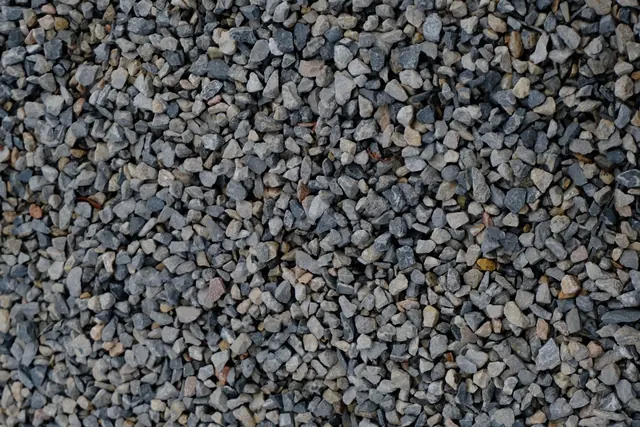
A blend name tells you the colour. The grading tells you how the surface behaves, and it is the figure people forget to ask about when they are busy choosing between Cappuccino and Alpine.
Driveways are normally 2-5mm, meaning every stone in the mix falls inside that band. Pathways and patios often use 1-3mm, a noticeably finer, tighter finish that photographs beautifully and reads almost smooth from standing height.
Texture is the real difference. Bigger stone leaves more open void at the surface, which gives you grip and lets water disappear faster. Finer stone closes that texture up. Resin bound surfacing generally performs well on the pendulum test that the UK Slip Resistance Group uses to classify flooring, comfortably clearing the value at which a surface is treated as low slip potential, but the margin is wider on a 2-5mm drive than a 1-3mm one. On a sloping Rochdale drive, and there are plenty on the valley sides around Wardle, Norden and Bamford, that margin is worth having through January.
Grading also drives the depth and the cost. Finer stone has far more surface area per kilogram, so it needs proportionally more resin to coat every particle. A quote that offers you a 1-3mm blend at a 2-5mm price has either absorbed the difference or is planning to under-resin it. Ask which.
The Ratio Nobody Puts in Writing
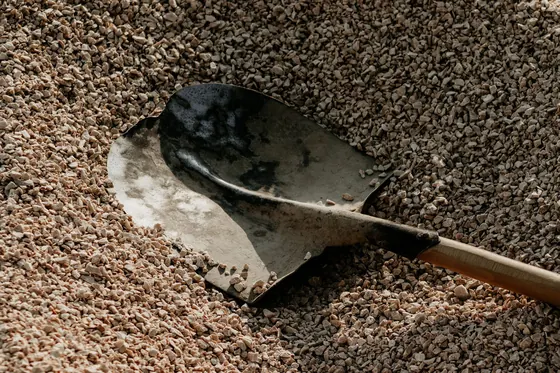
Resin bound is mixed on site, batch by batch, in a forced-action mixer. A conventional kit pairs around 125kg of kiln-dried stone with roughly 7.5kg of two-part resin, which covers about five square metres at 18mm or six at 15mm. Expressed as a percentage, the binder is somewhere around 6 to 7 per cent of the aggregate weight for a 2-5mm blend, and a touch higher for finer stone.
Go under that and the mix comes out of the mixer dry and crumbly. It trowels badly, it never properly knits together, and it starts shedding loose stone within a season or two - the fretting you see on cheap drives where the surface looks like it is slowly going back to gravel. Go over it and the excess binder drains down through the layer while it cures, glazing the base of the mix, filling the voids that make the surface permeable and occasionally leaving a slick, shiny patch on top.
This is the one number that almost never appears on a quote, and you are unlikely to get a figure out of anyone. What you can reasonably ask is whether the stone and the resin come as a matched system from one manufacturer, or whether the installer is buying bags of aggregate from one place and drums of binder from another and judging it by eye. A named system means the ratio has been worked out by someone who tested it. A bit-of-this-bit-of-that approach means it is being worked out on your drive.
Aliphatic or Aromatic: One Word, Three Years Apart
Polyurethane binders come in two families. Aliphatic resin is UV-stable and stays clear. Aromatic resin is cheaper to make and ambers under sunlight, and the discolouration is not a stain sitting on top of the drive - it is the binder itself changing colour, in the film that wraps every single stone. You cannot wash it off and you cannot polish it out.
How it shows up is worth knowing, because it is gradual enough that people talk themselves out of noticing. It reads as a warm, tea-coloured haze over the whole surface, strongest where the sun lands longest and barely visible in shaded strips along a wall or under a tree, which is the giveaway. Pale blends suffer most: silvers, creams, oyster and champagne colours can look distinctly ginger within two or three summers, while a dark anthracite can hide it for years. Rochdale’s grey reputation does not save you either, because it is ultraviolet that does the damage and that gets through cloud perfectly well.
The cost difference is smaller than people assume. Upgrading the binder on a domestic drive usually adds a few pounds per square metre, which on 40 square metres is low hundreds against a job running into the thousands. Set against relaying the whole surface because it has gone the colour of weak tea, it is not a close call.
If you already have a drive and you are wondering, go and look at the strip that sits in permanent shade beside the house wall, then look at the open middle. If the two no longer match, that is your answer. On a new quote, the only reliable version is the word aliphatic in writing, with the manufacturer named next to it.
What the Resin Is Actually Sitting On
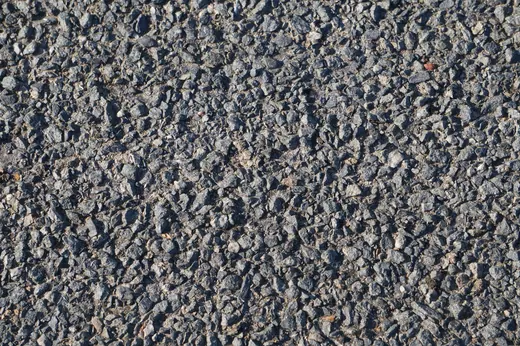
Resin bound cannot span anything. It takes the shape of whatever is under it, so the base specification matters more than the surface one. New construction normally means a compacted open-graded sub-base with a bound base course over it, usually around 50mm of porous asphalt, giving a rigid deck for the resin to key into. We have gone through the layers and the depths for local ground in our guide to what is under a resin driveway and how deep the sub-base should go, so this is just the quote-reading version.
Watch for one specific contradiction. MOT Type 1 is a well-graded stone that contains fines by design, and it compacts down to something close to watertight - which is the whole point of it under a road. It is not a permeable material. Reduced-fines stone such as Type 3, or a washed open-graded clean stone, is what lets water through. A quote that promises a permeable drive in one paragraph and specifies Type 1 in another has not thought it through, and permeability is the thing keeping a front garden conversion inside permitted development under the government’s guidance on surfacing front gardens.
Overlaying an existing slab is the other route, and it is legitimate when the concrete or tarmac underneath is genuinely sound. The catch on Rochdale’s clay and made ground is that plenty of older bases are not. A drive that has been quietly settling for fifteen years will carry on settling under new resin, and an old sealed slab means the finished drive drains at the edges rather than through the surface, which has to be designed for rather than hoped about.
Edges: The Cheapest Line to Cut
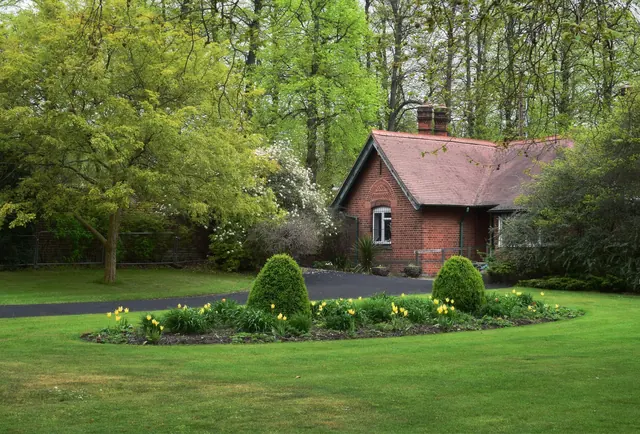
Every resin drive needs something holding its perimeter in. Without restraint the outer 50mm or so has nothing to push against, and it breaks away - first as loose stone along the lawn edge, then as a ragged, crumbling border that no amount of patching tidies up. It is the most common failure we get called to look at, and it is entirely preventable.
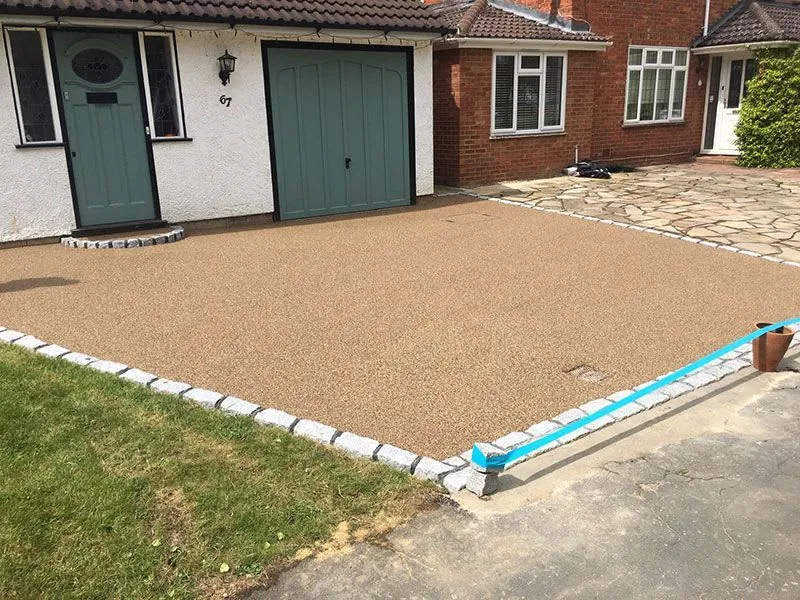
There are three honest answers on a quote. A block paving or setts edge course bedded and haunched in concrete, which is what the drive in the photo at the top of this page has. A proper aluminium edging, substantial gauge, upstand taller than the resin depth, pinned at close centres. Or an existing sound kerb, wall or garage threshold already doing the job. Flimsy plastic lawn edging is not one of them, and neither is nothing at all. So look for the word restraint on the quote, then the material, then how it is fixed. Interlay, the association for paving and surfacing contractors, is a reasonable place to see what the professional end of the trade treats as normal practice rather than an optional extra. A quote that describes the surface in loving colour and says nothing whatsoever about the perimeter has skipped the bit that fails first.
Three Questions That Make a Quote Declare Itself

You do not need to become a groundworker to compare prices properly. You need three answers, in writing, from everyone quoting. First: what depth is the resin laid at, and what is the aggregate grading? A serious answer sounds like “18mm at 2-5mm” and comes back immediately. Second: is the binder aliphatic, and whose system is the stone and resin? You want a manufacturer and a product reference, not the word “premium”. Third: what is the sub-base build-up, and how is the perimeter restrained?
Three quotes with those three answers filled in become genuinely comparable, and you will often find the cheap one stops being cheap once it is specified to match the others. If someone will not commit any of it to paper, that tells you plenty on its own - and it belongs alongside the other warning signs we set out in our guide to deposits, staged payments and driveway quote red flags in Rochdale. Worth adding that none of this applies to resin bonded work, which is a different product entirely and sold at a different price for good reason, as we explain in the difference between resin bound and resin bonded.
The point is not to catch anybody out. It is that a specification gives you something to hold a contractor to in four years, and a price per square metre gives you nothing at all. We would rather spend twenty minutes on a Rochdale doorstep explaining why the number says 18mm than come back in year three to a drive that is fretting at the edges.
Frequently Asked Questions
Should a resin driveway be laid at 15mm or 18mm?
For anything carrying vehicles, 18mm is the figure to hold out for, laid with a 2-5mm aggregate. 15mm is the normal depth for paths, patios and other foot-traffic areas, and it is also what a 1-3mm blend is usually laid at. The working rule in the trade is that the layer wants to be at least three times the biggest stone in it, so a 5mm top size cannot honestly be laid below 15mm and has very little margin at that. A Rochdale drive that parks a van deserves the extra 3mm.
What does 2-5mm or 1-3mm mean on a resin driveway quote?
It is the size range of the stone in the mix. A 2-5mm blend is the standard driveway grading - chunkier, more open, more texture underfoot, and it needs 18mm of depth to sit properly. A 1-3mm blend is finer and visually tighter, reads smoother, and is laid thinner at around 15mm. Finer stone also has more surface area per kilogram, so it drinks more resin. If a quote names a colour but no grading, you cannot tell which of the two you are being sold.
Is MOT Type 1 suitable under a permeable resin driveway?
Not on its own. Type 1 is a well-graded stone that includes fines, and once it is whacked down it compacts to something close to watertight, which is exactly what it is designed to do under a road. A permeable build wants a reduced-fines or clean open-graded stone instead, such as Type 3 or a washed 4/20, so rainfall can pass through the voids. Seeing Type 1 written under the word permeable on the same quote is a contradiction worth asking about.
How do I know a Rochdale quote is using UV-stable resin?
Ask for the word aliphatic in writing, along with the manufacturer’s name and the system reference. Aliphatic binders hold their clarity under sunlight. The cheaper aromatic ones amber over time, which shows up as a warm haze in the film between the stones and is most obvious on pale silvers, creams and whites. The two look identical the day the drive is handed over, so the answer has to come before you sign rather than after.
Want a quote with every one of those numbers already on it? Get a free, no-obligation quote in Rochdale.