
18 September 2026
Resin Driveways And Home Insurance In Rochdale: What Is Covered, What Is Not, And Who Pays
Nobody asks about insurance until the drive is already broken. Then it becomes the only question, and the answer turns out to be sitting in a document most of us have never read past the price. It matters more than people assume, because a resin bound drive on a typical Rochdale frontage runs somewhere in the region of £2,500 to £5,000, which is a serious sum to lose and an awkward sum to claim for. Buildings policies commonly carry an excess of £100 to £350 as standard, with a separate subsidence excess that is routinely £1,000 and sometimes higher. Wind claims often get measured against a rule of thumb of gusts around 55mph. So the honest position for most driveway damage is that the surface is technically insured, the specific thing that happened to it probably is not, and even where it is, claiming may leave you worse off. This is general guidance rather than insurance advice, and your own schedule is the only document that decides anything.
Is A Driveway Part Of Your Buildings Cover?
Start with the split that runs through every home policy. Buildings cover pays for the structure and anything permanently attached to it. Contents cover pays for the things you would take with you if you moved. A driveway cannot be lifted and taken anywhere, so it lands on the buildings side. The Financial Ombudsman Service uses the same division in its guide to how home and buildings insurance complaints are assessed, where buildings cover takes in the structure, the permanent fixtures and usually the outbuildings as well.
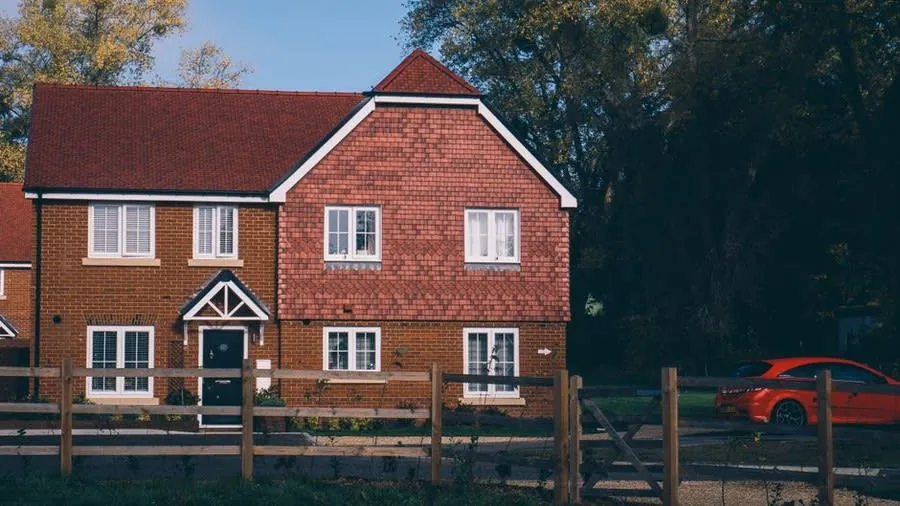
Where it gets slippery is the level below that. Insurers know perfectly well that hard landscaping is exposed, expensive and hard to argue about, so a lot of policies quietly separate it out. You will often find drives, paths, patios, walls, gates, fences and hedges bundled into one clause with a cash limit of their own, and a shorter list of insured events than the house gets. Some policies go further and exclude storm and flood damage to that whole group. None of this is hidden, exactly. It is on page eleven.
So before you spend money on a new resin bound driveway, give your policy documents ten minutes. Two questions answer most of it. Does the wording name driveways, paths and patios anywhere, and if so, is it naming them to include them or to limit them? And is there a separate cash cap on external and landscaped features? A cap of two thousand pounds against a drive that cost four is the sort of thing you want to find out now rather than in February.
The Exclusions That Do Most Of The Damage
The commonest reasons a driveway looks bad are the exact reasons a policy will not pay. Wear and tear is excluded on every home policy in the country. So is gradual deterioration, sometimes written as damage happening over a period of time. Between them they cover the surface dulling, stone coming loose at the edges, the finish going patchy where the car always sits, and anything that arrived slowly enough that you cannot point to a day it happened.

Frost sits in the same category more often than people expect. Out towards Wardle, Syke and the higher ground above Littleborough the freeze-thaw cycling is harder than it is down in the valley, and a poorly built surface will show it. An insurer looks at five winters of freezing and thawing and sees ordinary weather acting slowly, which is deterioration rather than an accident. Tree roots are usually excluded outright, or excluded where the tree was already there and the damage was foreseeable, which on a street lined with mature sycamores is most of the time. We went through the practical side of that in our piece on what tree roots actually do to a driveway.
Subsidence is the odd one out. It is normally insured, because it can be sudden and catastrophic, but it comes with its own excess that starts around £1,000, and many policies restrict subsidence cover for drives, paths and patios unless the house itself has moved at the same time. That restriction catches people badly on the clay-influenced ground you get in parts of Castleton and Balderstone, where a drive can settle while the house sits perfectly still.
Storm, Flood And What Counts As A Storm
Rochdale has a long memory for water. The Boxing Day floods of 2015 put the town centre under, and insurers in this borough have priced surface water seriously ever since. If your drive gets swamped, whether the policy responds depends on two things that sound similar and are not: was it a storm, and was it a flood.
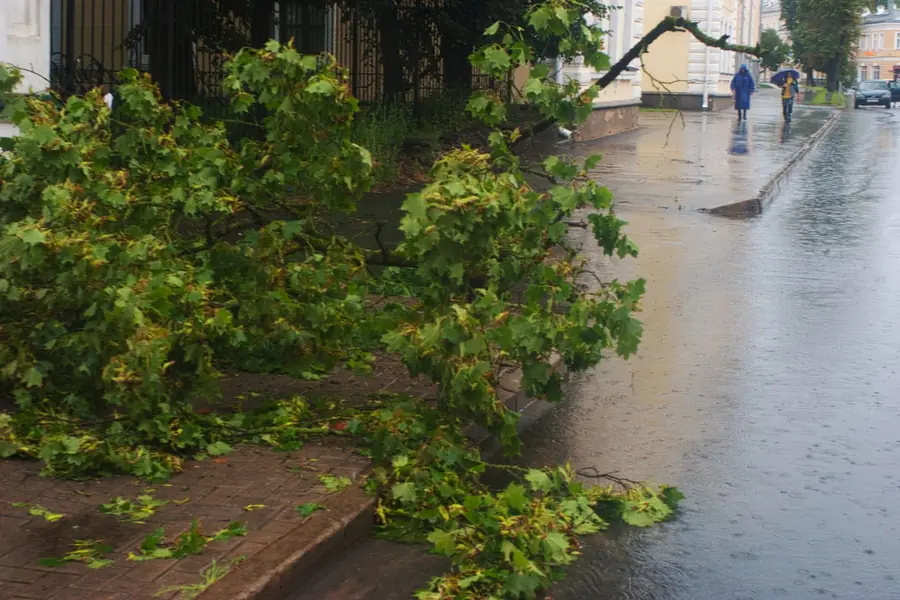
Insurers do not accept “it was windy” as a storm. They look for a violent, identifiable weather event, and the working benchmark across the industry is wind gusts somewhere around 55mph, backed up with records from the nearest weather station. A branch dropping on your drive during a named storm is a plausible storm claim. The same branch coming down on a still Tuesday in March is not, even if the tree was weakened by the storm three weeks before.
Flood is a separate peril with its own definition, generally a large volume of water arriving suddenly from outside the property. What we actually get here most of the time is not that. It is heavy, sustained rain, and a resin bound surface handles it because it is permeable. Permeability only works if the sub-base underneath can take the water away, though, and a drive that ponds is far more likely to be a drainage design problem than an insurable one. That distinction is worth understanding before you phone anyone, and it is covered properly in our guide to drainage and flood risk on Rochdale driveways.
Spills, Stains, Vandalism And The Accidental Damage Question
Oil and fuel are the most common driveway complaint we hear that has nothing to do with the resin. A leaking sump, a knocked-over jerry can, a diesel spill off a van sitting overnight. Whether insurance touches it depends almost entirely on whether you bought accidental damage cover for buildings, and that is an optional add-on on a great many policies rather than something included by default.

Even with accidental damage cover in place, a stain is a hard sell. It has to be sudden and unintentional, and a slow drip from a car you have parked in the same spot for two years reads as gradual. The practical answer is almost always to deal with it yourself, quickly, because fresh oil on a resin bound surface sits in the voids near the top and lifts far more readily than oil that has had a summer to work in.
Vandalism, malicious damage and arson are usually insured perils on the buildings section, which surprises people. If someone lights a fire on your drive or takes a pickaxe to it, that is closer to a real claim than any of the weather scenarios above. Two conditions tend to apply. You are normally expected to report it to the police and supply the crime reference, and cover for malicious damage is often withdrawn once a property has been left unoccupied beyond a stated period, commonly 30 or 60 days. Both of those are worth checking if you have a rental or a house sitting empty between tenants.
When Somebody Else Breaks It
If somebody else damaged your drive, go after them, not your own insurer. A skip lorry that swings onto the corner of the surface. A concrete mixer delivering to next door. A courier’s van reversing hard. A neighbour’s landscaper running a tracked machine across your frontage. In every one of those cases another party is already carrying cover for exactly this, and using it costs you nothing.
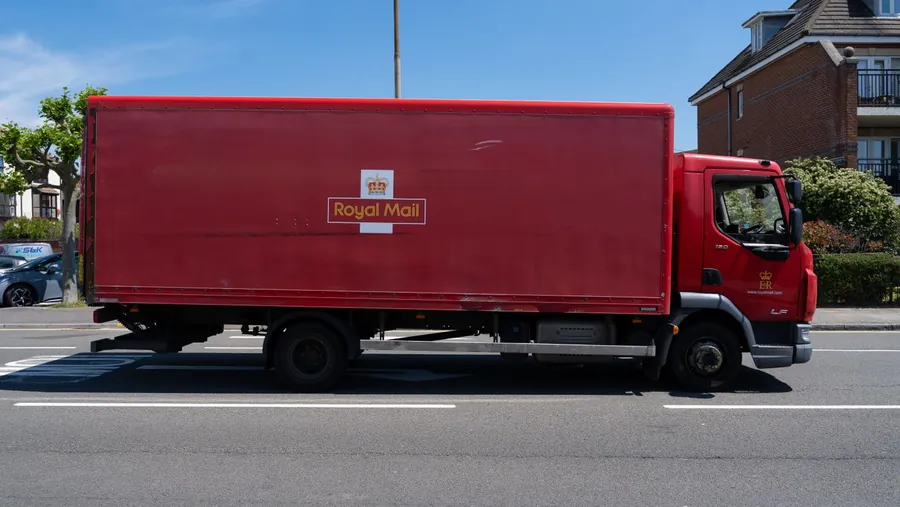
For a haulier or courier it is their motor insurance. For a builder, a landscaper or a tree surgeon it is their public liability policy, which is the reason you should ask any contractor working near your boundary for their insurance details before they start, not after. Gather the evidence while it still exists: photographs of the vehicle and its plate, the company name off the side, the damage from two or three angles with something in shot for scale, the date and time, and a note of anyone who saw it. Then put it to the operator in writing rather than having a conversation on the pavement.
Utilities are the exception, because they have a statutory right to open the surface and a separate duty to reinstate it, which is a different process from a liability claim. We have covered that in detail in what happens when someone has to dig up your resin driveway, so it is enough to say here that a utility dig is not an insurance matter and should not be treated as one.
If you do end up claiming on your own policy for third-party damage, tell your insurer who caused it. Insurers pursue the other side themselves, and if they recover in full they normally refund your excess and stop treating the claim as one that should load your premium.
Telling Your Insurer, And What Your Sum Insured Should Say
Putting in a driveway is not usually a material change that has to be declared halfway through a policy year. It does not alter the construction of the house, the use of the property or the risk profile in the way that an extension or a business at home would. That is the general position, and your policy wording will confirm or contradict it.

What does need attention is the rebuild figure. If your policy runs on a stated buildings sum insured, that number is supposed to represent what it would cost to put the property back, and hard landscaping forms part of it. Add four thousand pounds of driveway and never move the figure, and you have quietly become underinsured. That is not a theoretical problem: where an insurer finds the sum insured was materially too low, it can reduce the settlement in proportion, on an unrelated claim, years later. Many modern policies avoid this by offering unlimited or bedroom-rated cover, in which case there is nothing to adjust. The Association of British Insurers’ overview of home insurance is a reasonable starting point for understanding which basis you are on.
So when the renewal lands, mention the drive, ask whether the buildings figure needs to move, and file the invoice with your policy documents. That is the whole job, and it takes about two minutes.
Why A £600 Claim Can Cost More Than It Pays
Run the numbers before you pick up the phone. Take a repair to a damaged section quoted at £600, on a policy carrying a £250 excess. The insurer pays you £350. The claim then sits on your record and has to be declared to every insurer that asks for the next five years.

What a claim does to your premium varies by insurer and by claim type, but a loading somewhere in the region of £40 to £80 a year is a fair range to assume for a single buildings claim, and it applies to the whole premium rather than the part notionally covering the drive. Five years of that is £200 to £400. At the top end you have paid back more than the insurer ever gave you, on top of the £250 you handed over at the start, and you may have lost a no-claims discount as well. The maths flips completely once the figure gets large. A drive written off by a fire or a lorry is exactly what insurance exists for, and nobody should absorb several thousand pounds out of misplaced stoicism.
The other half of the calculation is evidence, and it costs nothing to keep. Photograph the finished drive when it is new, in decent light, from the pavement and from the front door. Keep the invoice, the written specification showing the sub-base depth, the aggregate and the resin system used, and the guarantee document. Take a few photographs every spring so there is a dated record of condition. If you ever need to show an insurer or a third party that the damage was sudden rather than gradual, that sequence of photographs is the whole argument. Citizens Advice sets out what to expect when making an insurance claim and how to challenge a decision, and it is worth reading before you start rather than after a refusal.
Where The Insurer Stops And Your Installer Starts
An insurer will not pay for defective workmanship. It is excluded, explicitly, on every home policy, and the reason is not hard to see: the person who built it badly is the person who should fix it. Most of the driveway arguments we get called into eventually land on this line.

So a resin surface that has cracked because the sub-base was 60mm of whatever was in the van, or gone brittle because the resin was mixed wrong on a cold morning, or lifted at the edges because there was no proper restraint, is not an insurance claim in any universe. It is a claim against your installer’s guarantee and, behind that, your rights under the Consumer Rights Act 2015, which entitles you to work carried out with reasonable care and skill regardless of what any guarantee document says. What those guarantees are really worth is a subject in itself, and we pulled it apart in our piece on what a ten year driveway guarantee is actually worth.
Two things follow. First, keep the guarantee and the installer’s contact details somewhere you will find them in three years, because a guarantee you cannot produce is a guarantee you do not have. Second, when something does go wrong, work out which of the three doors you are knocking on before you knock: the insurer for sudden accidental events, the third party for damage they caused, the installer for anything that was built wrong. People lose months, and occasionally their claim, by going to the wrong one first.
If you would rather get the specification right at the outset so the question rarely arises, book a free site visit and a written quote and we will walk your frontage with you.
Frequently Asked Questions
Does home insurance cover a resin driveway?
Usually, in the sense that a driveway is a permanent part of the property and so falls on the buildings side of a home policy rather than the contents side. That is not the same as being covered for everything. A great many policies put drives, paths, patios, gates, fences, walls and hedges into their own group with a separate limit and a shorter list of insured events, and some of them strip storm and flood damage out of that group entirely. The only way to know what yours does is to read the schedule and the policy wording together, because the schedule gives you the limits and the wording gives you the exclusions. If the two seem to disagree, ring the insurer and get the answer in writing.
Do I need to tell my home insurer about a new driveway?
A new driveway is not normally the sort of change that has to be declared mid-term in the way that an extension, a loft conversion or running a business from home would be. What it does change is the cost of rebuilding your property from scratch, and that matters if your policy runs on a stated buildings sum insured rather than an unlimited or bedroom-rated basis. Adding a driveway worth several thousand pounds without moving the sum insured is how people end up underinsured, and underinsurance can reduce a settlement on an unrelated claim. Mention it at renewal, ask whether the figure needs adjusting, and keep the invoice.
Will my insurance pay to fix a cracked or crumbling resin driveway?
Almost certainly not, if the cause is age, weather over time, or how the drive was built. Every home policy excludes wear and tear and gradual deterioration, and a surface that has dulled, gone brittle or started losing stone at the edges after several winters is the textbook example. Insurance responds to sudden, identifiable, accidental events. A drive that failed because the sub-base was too thin is a workmanship problem and belongs with your installer or with your rights under the Consumer Rights Act 2015, not with your insurer.
A delivery lorry damaged my driveway - who pays for the repair?
The party who caused the damage, through their insurance rather than yours, if you can identify them. Photograph the vehicle, the plate, the company name and the damage while everything is still in place, note the date and time, and put the claim to the operator in writing. For a haulier or a courier the relevant cover is their motor policy. For a builder or a landscaper working next door it is their public liability cover. Recovering from them keeps your own claims record clean, and it avoids you paying an excess for something you had no part in. Claiming on your own policy is the fallback, not the first move.
Is this article insurance advice?
No. It is general guidance written from the perspective of people who install and repair driveways in the Rochdale area, and policy terms vary enormously between insurers and between products from the same insurer. Nothing here should be taken as a statement of what your particular policy does. For a decision that turns on the wording, read your own schedule, speak to your insurer or broker, or get free impartial help from Citizens Advice. If your insurer has already made a decision you think is wrong, the Financial Ombudsman Service can look at it once you have complained to the insurer first.